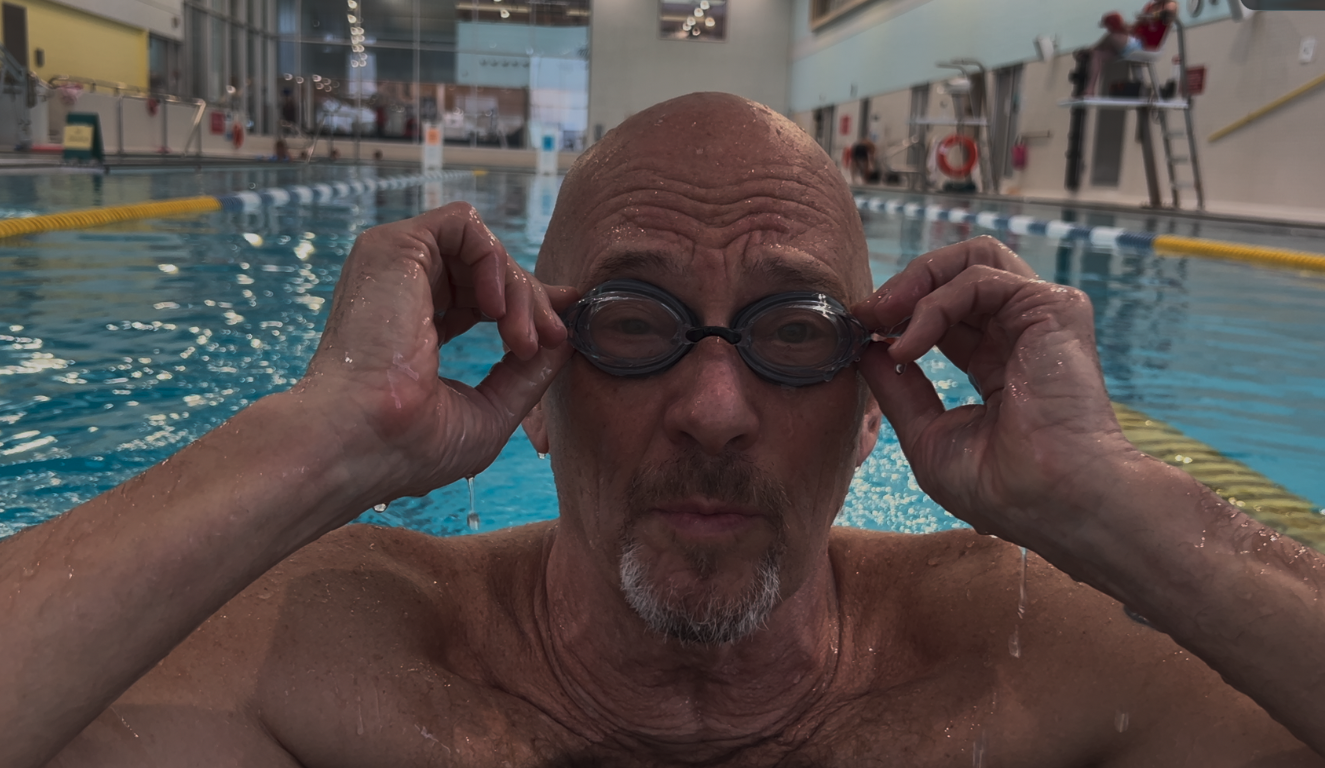
Training Plateau
Question comes up a lot.
"What do I do when I hit a plateau?"
"I don’t seem to be able to improve past a certain point."
There can be different reasons for this.
One possibility is that the swimmer or athlete is just doing the same thing and not varying how he or she stresses the body.
One of the very early training methods for swimmers was adapted from a running technique called The Fartlek Method or ‘Speedplay’.
There a few different examples of the Fartlek technique.
One is to alternate two lengths a bit faster and then two slower.
If you are normally swimming a kilometre, then you could alternate fast and slow for that distance.
If you find you are getting more tired after doing this for a bit, that’s OK, just take a short break after a certain number of repeats.
As you keep up this type of workout, it will get easier.
Another method of doing this:
One length fast One slower
Two fast then two slower
Three fast then three slower
Four fast then four slower
Three fast then three slower
Two fast then two slower
One fast then one slower
In a 25 metre pool, this gives you 32 lengths which is approximately half a mile.
Interval Training
Next step after this would be interval training.
“Interval training is a method of physical training that involves
alternating short periods of high-intensity exercise
with periods of lower-intensity effort or rest.
This approach challenges both aerobic and anaerobic energy systems,
improving cardiovascular fitness, endurance, speed, and metabolic efficiency.”
So here you might do sets of 50 metres.
Say, 10 sets with a 20 second rest between each.
Some might do that 10x50 metres with a 10 second rest.
All depends on fitness level and goals.
The next step up would be High Intensity Interval Training (HIIT)
“High-Intensity Interval Training (HIIT) is a workout method that alternates short bursts of intense,
near-maximal effort exercise with brief recovery periods of low-intensity activity or rest.
These intervals typically last from 20 seconds to 4 minutes,
with the high-intensity phase pushing the heart rate to 80–90% of its maximum.
The goal is to maximize calorie burn, improve cardiovascular fitness, and boost metabolism—
often in just 15 to 30 minutes—making it a time-efficient alternative to traditional steady-state cardio.
HIIT can be performed using bodyweight exercises, running, cycling,
or equipment and is adaptable for various fitness levels.”
This type of training, varying one’s speed, has been tested extensively over decades.
Thus found to be much more effective for increasing one’s stamina and speed.
So, if you have found that you are not improving, that you have reached a plateau and can’t seem to get past that, try one of these.
But use the system that fits your fitness level.
There are other reasons for not moving or improving but if nothing else, varying what you do in your workouts will,
minimally make your workouts more interesting.